
A Very Happy Spring

Please enjoy some nature ambiance I recorded in situ while reading.
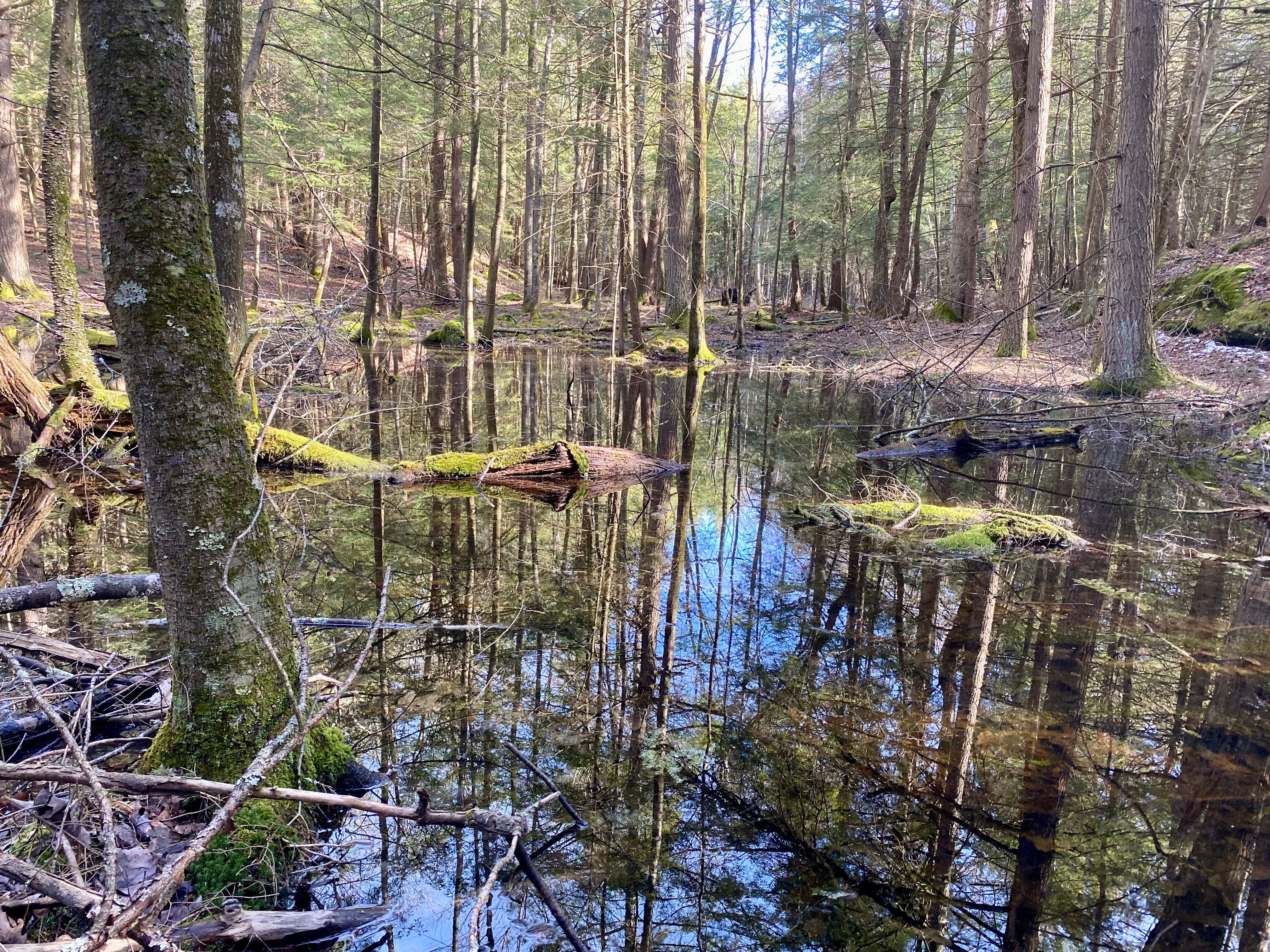
The dramatic transitions that unfold in early spring never cease to amaze me. This isn’t my first rodeo, yet I feel more in awe than ever when stepping into the forest this season. I’m realizing this is a precedent that continues to exceed itself every year.
After sustaining another season of damp cold and seemingly eternal darkness, my body and psyche crave sunlight and the magical emergence of life from the depths of last year’s detritus. As always, nature delivers, and it doesn’t take long for the landscape to undergo miraculous change.
I’ll try not to blink too much.
It is with wide eyes and eagerness that I enter the forest this morning, on the prowl for burgeoning new beginnings. Immediately, my ears are greeted by a fresh soundscape of bird song. Spring marks the beginning of most species’ breeding season, and their business in establishing territories and attracting mates is evident all around me.
Black-capped chickadees sing their spring song – “cheeeeseburger,” while a red-bellied woodpecker drums his beat on the silver trunk of a long-dead red maple tree. Other birds chime in as well, no doubt invigorated by the rising sun and warm, spring air. The repetitious peter, peter, peter of tufted titmice and hasty chipping of a dark-eyed junco intersperse with the descending whistles of northern cardinals. A dozen American robins rustle in the leaf litter and banter back and forth cheerfully.
The fairy-like song of brown creepers sneaks into the chorus from a distance. These well-camouflaged birds with hooked beaks scale the trunks of trees, probing for insects and searching for crevices behind peeling bark to build their tiny hammock-shaped nests. A purple finch even darts through the trees to make an appearance, tilting his head back to belt out a rich series of ascending and descending notes. He perches so close I can see the sun glistening in his eye.
After breaking my gaze with the purple finch, I continue down a decline in the trail to stumble upon patches of green on the forest floor. Upon closer examination, I realize that I am looking at two different species of clubmoss.


Clubmoss is a bit of a misnomer, given that this group isn’t actually a moss at all. Instead, they are vascular plants resembling tiny stands of conifers. The two species along my path are fan clubmoss (Diphasiastrum digitatum), also known as ground cedar, and ground pine (Dendrolycopodium obscurum). Both exhibit a straw-colored spike at their apex, known scientifically as a strobilus. These reproductive structures contain spores which float on the wind to pollinate other individuals. Birds aren’t the only ones getting busy around here.
When kneeling down for a closer look, I consider the possibility that some tiny organisms may perceive clubmoss as a kind of “tree canopy” or miniature “forest.” While this thought may be a bit ingenuous, I like to consider the lives of others through their perspective. What would it be like to experience life as an insect or mite? Or as a salamander?
After spending the winter months hibernating, burrowed deep within leaves and soil, salamanders are waking with the warming temperatures. Just like birds, clubmosses, and countless other creatures, they too have sex on the mind.
There are eighteen species of salamander living in New York state, and their preferences differ when it comes to reproducing. Today, I am especially keen on the escapades of the spotted salamander. The first warm rains of the season have fallen, triggering a mass migration of adults from their subterranean hibernaculum to ancestral breeding pools.
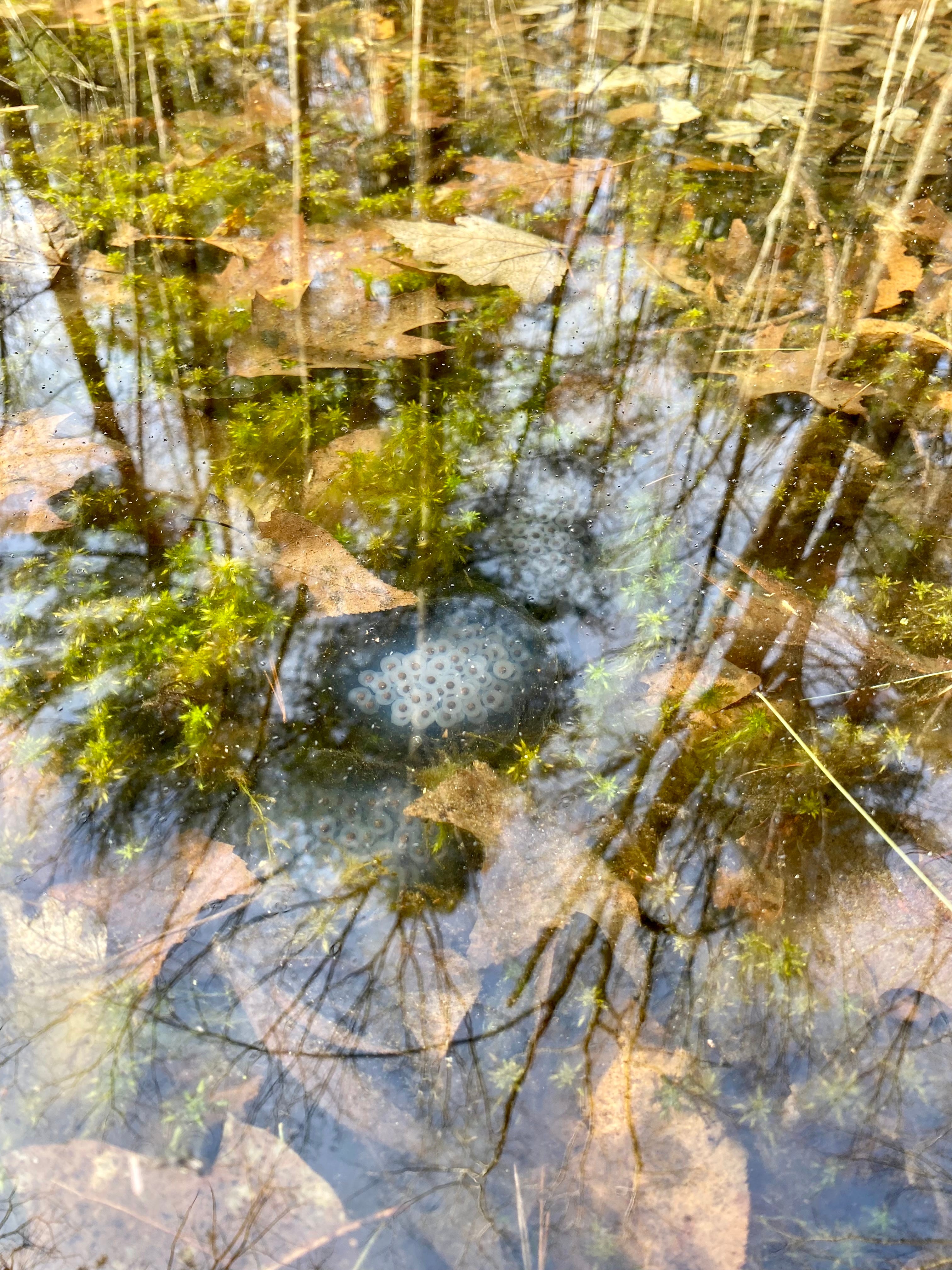
Throughout the year, spotted salamanders rely heavily on tunnels burrowed by moles and shrews to hunt and travel underground. Unlike some salamanders, their reproduction is reliant on seasonal bodies of water, known as vernal pools. In early spring, they leave their burrows to seek these out, differentiating their native waters from others via smell.
Males deposit spermatophores, clusters of sperm, onto the submerged leaf litter for females to gather up. A few days later, she deposits egg masses full of dozens of fertilized eggs. These masses have a translucent, gelatinous appearance and are typically attached to leaves or twigs. In a month or two, tiny tadpoles will emerge, and by the end of summer, metamorphose into fully formed salamanders. My hope today is to find some or, if I’m lucky, cross paths with a spotted salamander.
Scattered across the vernal pool are a half-dozen, or so, egg masses. They take on a blue hue to my eyes, and after a few seconds of peering through a glare on the water’s surface, I spot them. Each mass of eggs is surrounded by a thick, milky layer. This is a key feature in deciphering between salamander and frog or toad eggs. The latter two amphibian’s eggs lack this structure.
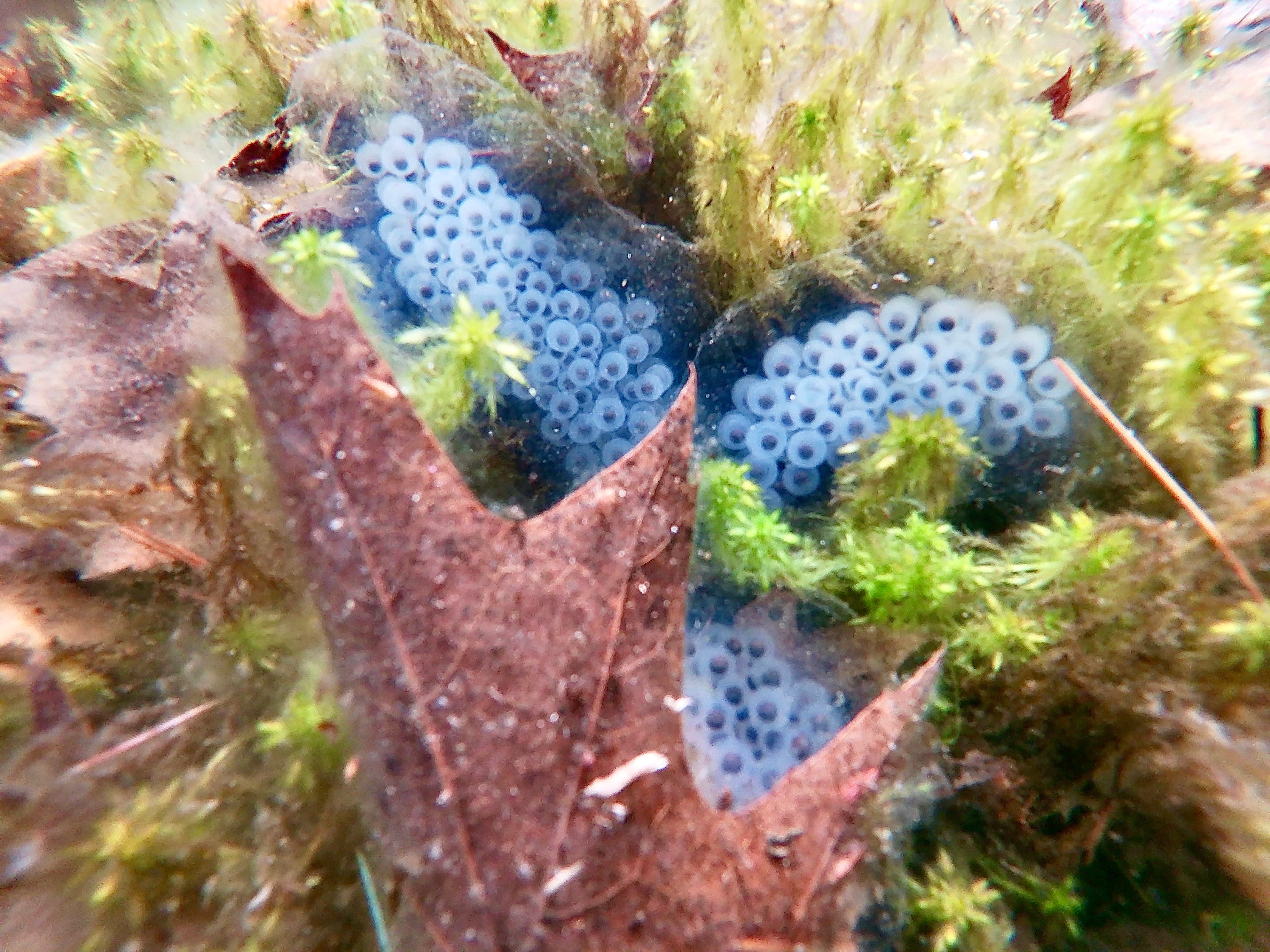
I search around briefly for any adults but strike out. This doesn’t come as much of a surprise, given they migrate under nightfall in rainy weather. Instead, I shift my search towards another species – the Eastern red-backed salamander, commonly referred to as a redback.
I head away from the pools towards an area with several decaying logs, scattered across the forest floor. My best chance of locating a redback is by slowly and carefully rolling these over, as to minimize disturbance and avoid crushing any life forms living beneath.
This is a considerate and respectful way of doing things and should be employed by anyone searching for salamanders. When done scanning the decay and soil in the timber’s footprint, I carefully roll it back in place with the goal of leaving it just the way I found it – seemingly undisturbed.
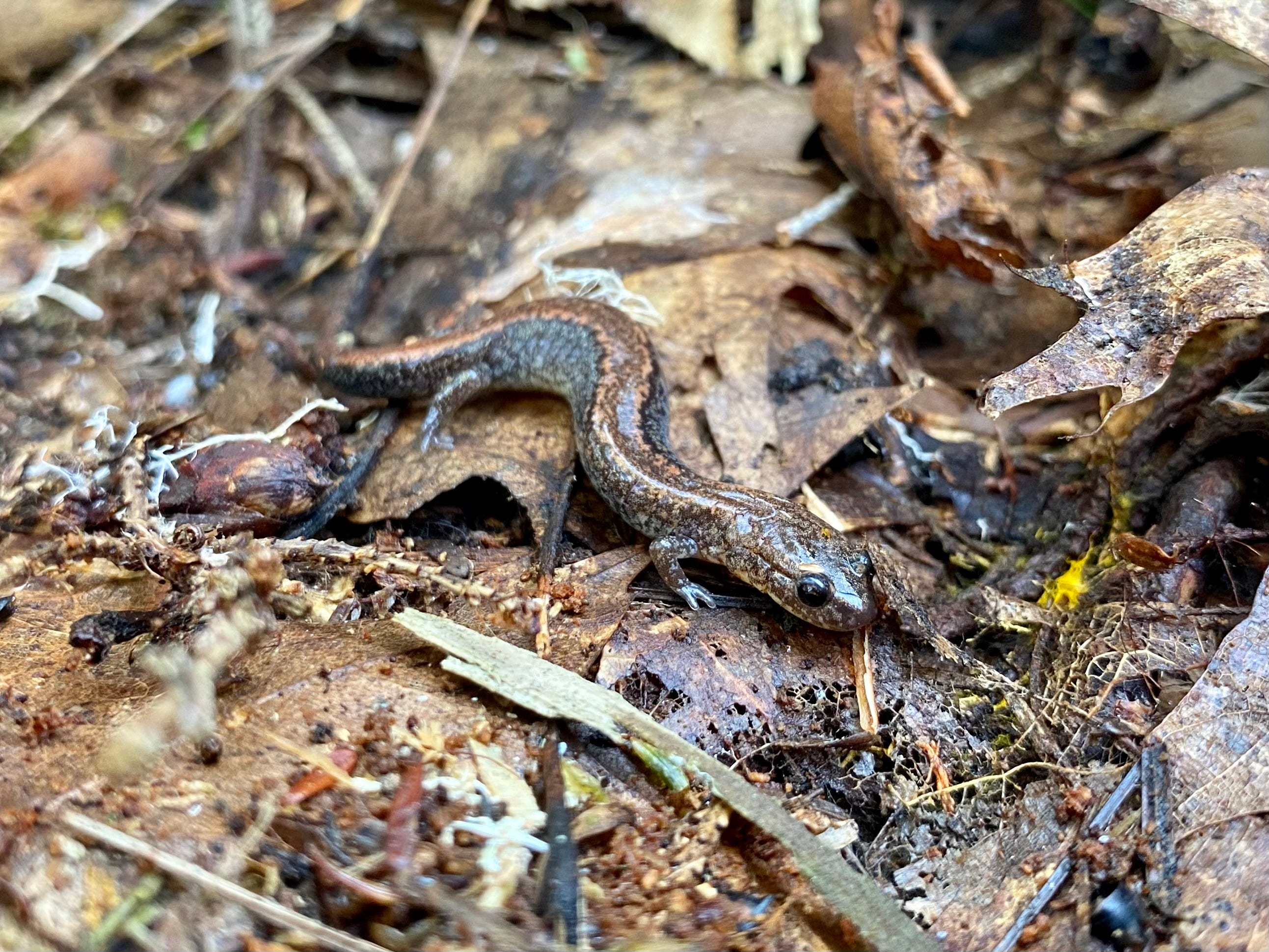
Three more are rolled before I have my first encounter. A tiny redback, a fraction of the size of the spotted salamanders that prey on them, sits still in the rot. A clear, brick-red stripe spans from the base of its head to tail. I snap a few photos before moving on to the next log.
Again, success! This time the tiny amphibian is rolled onto its side, displaying a salt-and-pepper speckled belly. Neither individual moved much due to the cold temperatures, so I decided to spend minimal time before leaving them in peace.
Red-backed salamander reproduction differs from that of their larger relative. Their entire lifecycle takes place on land, and they breed, mostly, in the fall. Females lay grape-like egg clusters in cavities beneath logs and stones during the summer months. Mothers guard their clutch until hatching occurs a month later, when even-more-tiny, miniature adults emerge.
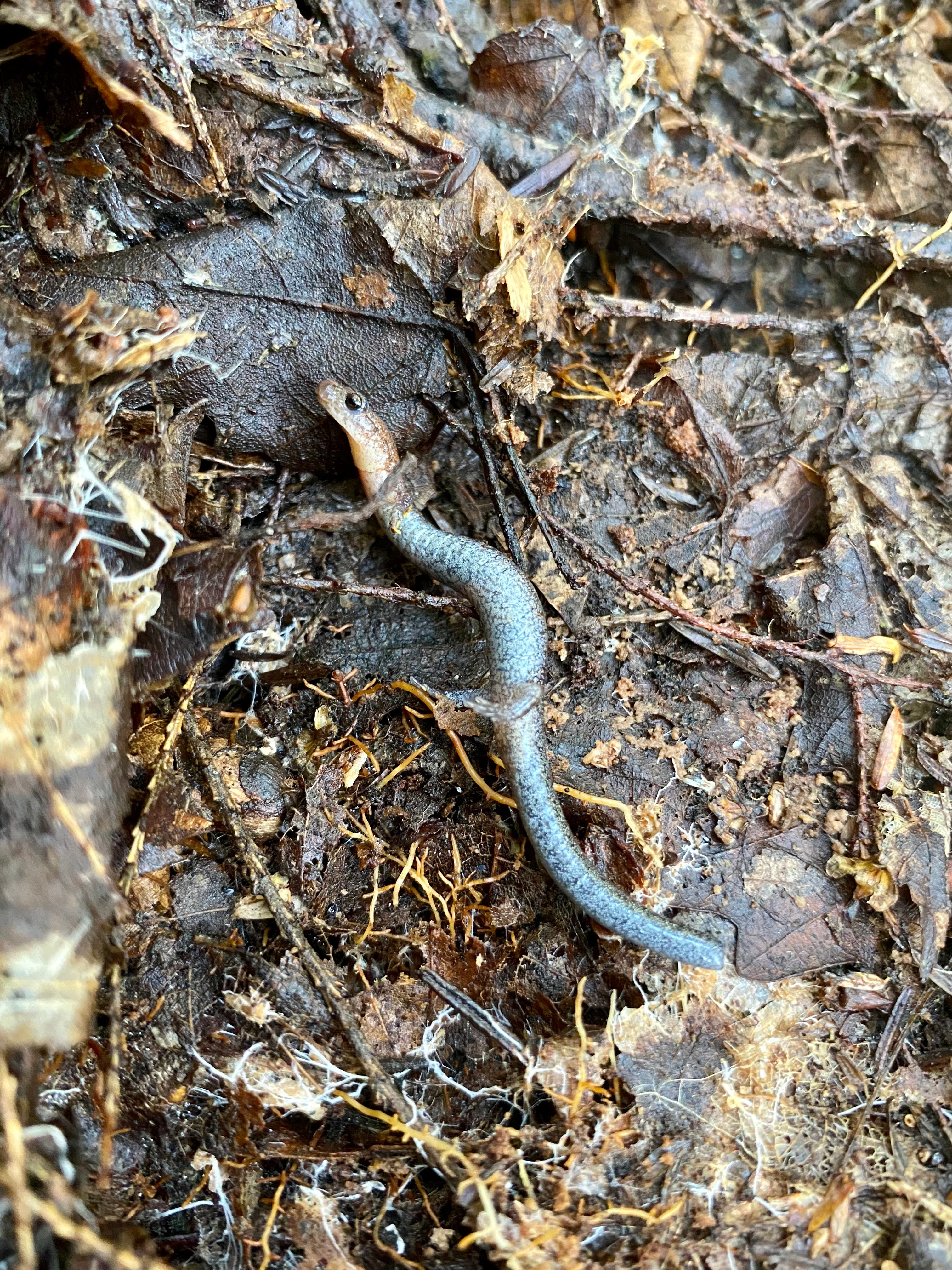
As I gently roll a final trunk back into place, I am struck by how child-like I feel. A sense of wonder and adventure ripples through my mind and body anytime I go herping (searching for reptiles and amphibians) and time melts away. It’s a wild world out there and pure excitement comes with the turning over of each log.
Before long, I notice the heightening sun through the forest’s barren canopy. My stomach says it’s hungry and I decide I should be getting back. I also have adult responsibilities at home that extend beyond the usual weekend house upkeep.
Our first child, Ivy, is a month old now, and it wasn’t long ago that we questioned whether or not parenthood was in the cards for us. It took some time before being able to conceive and grappling with the emotions and uncertainties of the situation resulted in some dark times.
We had never longed for something so intensely before in our lives, together or as individuals. Having a family of our own had always been the plan, and being forced to sit with the idea that it may just be the two of us was seriously painful. Despite the difficult journey, we knew it would work out and kept the faith. Fortunately, it did.
I think that we all know what it’s like to experience this level of hardship and uncertainty in our lives. Whether it be a change in our circumstances, personal development, or endless other areas, it can seem like things may never shift in the direction we desire. Feelings of discouragement and unhappiness rise as we tell ourselves a story that we will never get or achieve what we’re after.
The truth is, we write our own life’s tale based on our perception of its experiences. The question is: How can we frame life’s happenings in a positive way, despite how good or bad we feel when we go through them?
Magic exists, especially for those who place as much certainty on positive outcomes in their lives as they do on the arrival of the spring season. When we know that something is going to come, the universe has a way of delivering.
Nature.
You’re writing transports me🦎